Green Energy Revolution: Philippines Emerges as Southeast Asia's Sustainability Hub

Tino Zwirs
Co-Founder of StellarPH
The Philippines is experiencing an unprecedented surge in environmental entrepreneurship, with green startups multiplying at an extraordinary rate and attracting billions in investment. This transformation is positioning the archipelago nation as Southeast Asia's emerging leader in sustainable innovation, driven by ambitious government policies and urgent climate challenges.
Clean Energy Startup Explosion
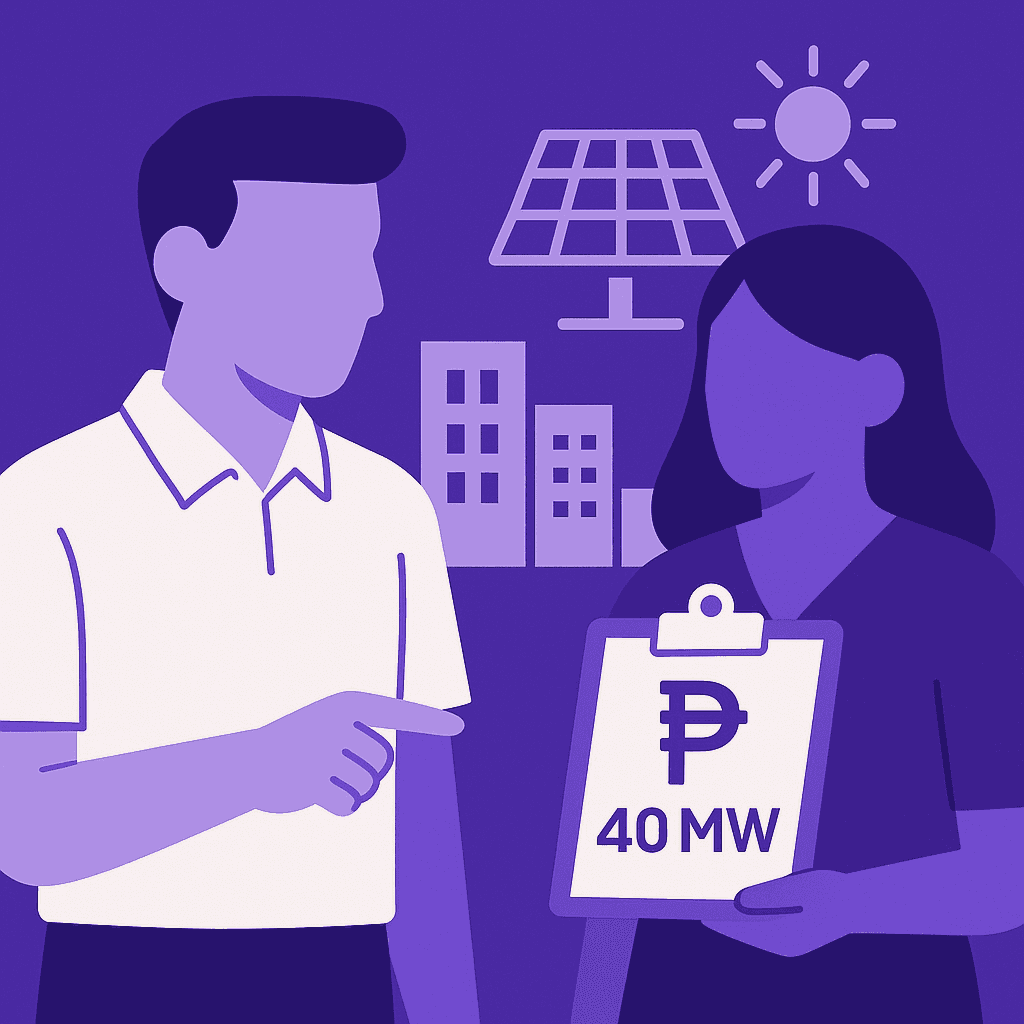
The clean energy sector has witnessed the most dramatic growth, with startups increasing 500% from 15 to 91 companies in just four years. This remarkable expansion spans multiple renewable energy technologies, with solar power leading the charge as nearly half (49%) of these startups focus on renewable energy generation. The remaining companies are diversifying into sustainable transportation (8%), energy access (8%), and waste management (7%).
Solar Philippines, founded by Leandro Leviste in 2013, stands as the sector's flagship success story. Starting with small-scale rooftop installations, the company has grown to become Southeast Asia's largest solar company with over 300 MW of generating capacity and 10,000 hectares of land. The company's journey from importing Chinese solar panels for mall installations to developing utility-scale solar farms demonstrates the sector's rapid maturation.
Other notable clean energy innovators include Hive Energy PH, which provides renewable energy-powered portable power stations for island communities, and Light of Hope, bringing cloud grid units to off-grid areas. Lycan Motorcycles has emerged as the country's first developer of AI and IoT-enabled electric motorcycles, representing innovation in sustainable mobility.
The Terra Solar Project exemplifies the sector's ambition, with construction underway on what will become the world's largest integrated solar and battery storage facility at 3.5 GW capacity. Meanwhile, Blueleaf Energy announced a $1.5 billion investment in a 1.5GW floating solar facility in Laguna, expected to offset 2.3 million tons of CO2 emissions.
Waste Reduction and Circular Economy Leaders
Filipino startups are tackling the nation's severe waste management challenges with innovative solutions. The Philippines generates at least 61,000 million metric tons of solid waste daily, creating urgent demand for effective waste management technologies.
Rezbin, founded in 2023 by siblings Mari and Mica Martirez in Iloilo, exemplifies this new wave of waste-focused startups. The company builds technology and frameworks to formalize the waste industry, deploying plastic recovery bins across barangays, schools, and businesses while encouraging refillable options. Rezbin recently won the Impact Startup category at the ASEAN Startup Award 2024, earning a $10,000 research fund to support expansion plans.
Humble Sustainability, established in 2021 by Niña Opida and Josef Werker, addresses the country's 1.1 million tons of annual electronic waste. The startup provides businesses with sustainable solutions for disposing of laptops, desktops, and monitors through refurbishment and resale, positioning itself as an ESG partner that provides climate data to help businesses track sustainability efforts. The company has already helped over 75 businesses recycle their e-waste and aims to reintroduce one billion items into the circular economy by 2030.
Next2Fly transforms organic waste using black soldier flies, converting waste into valuable resources including larvae for animal feed and organic fertilizers. Green Antz, founded in 2013, tackles plastic pollution through building solutions that integrate eco-friendly practices, launching Eco Hubs that collect plastic waste and transform it into eco-bricks, pavers, and furniture.
Sustainable Agriculture Innovation
The agriculture sector, employing millions of Filipinos, is undergoing digital transformation through agritech startups focused on sustainability and efficiency. These companies are addressing challenges including climate uncertainty, land fragmentation, and limited mechanization.
Mayani, founded in 2019, creates sustainable market pathways for smallholder farmers and fisherfolk through farm-to-table partnerships and digital platforms. The company has built grassroots networks across six regions and received support from the Asian Development Bank. Cropital addresses financing barriers by connecting smallholder farmers with individual investors, offering shared returns of 3-30% depending on the crop.
CloudFarm Innovations, established in 2015 in Davao City, utilizes IoT and big data analytics to help farmers increase crop yields through their Heat Stress Analyzer product. The system tracks temperature, light intensity, soil moisture, humidity, and pH, sending data to cloud-based analytics systems for automatic control.
Agridom, developed by SF Group of Companies Inc., introduces drone-powered precision farming tools designed to improve agricultural efficiency and sustainability for smallholder farmers. The startup recently became a finalist in Shell LiveWire 2025, competing for ₱1 million in equity-free funding.
Anihan Technologies (AniTech), founded in 2021, focuses on reducing food loss in Asia through sensor-based systems that help farmers track storage conditions and spoilage rates. The platform offers visualizations of operations along with automated notifications and reports.
Government Support and Investment Climate
The startup ecosystem benefits from strong government backing, with 87% of clean energy startup capital coming from government grants and competition prizes. The Department of Energy has implemented supportive regulations including the Microgrid Systems Act and Electric Vehicle Industry Development Act in 2022, while setting ambitious targets of 35% renewable energy by 2030 and 50% by 2040.
The Board of Investment granted green lane access to 176 projects in 2024, with 141 renewable energy projects worth $70 billion. Programs like the Young Farmers Challenge (YFC) and Shell LiveWire provide crucial early-stage support, with 19% of all Southeast Asia venture capital in 2024 flowing into the Philippines.
Despite this growth, challenges remain. New Energy Nexus Philippines warns that startups still struggle to scale due to difficulty finding venues for large-scale testing and lack of comprehensive startup incubation centers connecting public and private sector resources. However, the foundation for sustainable innovation continues strengthening, with organizations like Villgro Philippines launching the Circular ClimAccelerator to support circular economy startups.
The Philippines' green startup revolution represents more than economic opportunity—it embodies the nation's commitment to sustainable development in the face of climate change. With continued government support, increasing private investment, and growing international recognition, Filipino green startups are poised to lead Southeast Asia's transition to a sustainable economy.
Philippines Leads Green Startup Revolution
Related Articles

Philippine FMCG and Healthcare Sectors Escalate Fight for Digital Talent
Read article
Drone AI Crack Detection from DLSU Reaches NAST Finals as Deep‑Tech Interest Rises
Read article
Southeast Asia Startup Funding Matures as VC Tightens and Alternative Models Stall
Read article